Blog

  • Our diagnosis: 3 weeks after moving to Italy

    Our diagnosis: 3 weeks after moving to Italy

    In August 2025 we moved to Southern Italy with my husband’s job. It was an exciting time, moving to live in the sun, near the beach and a place revolving around pizza, pasta and gelato.

    However, we could not have predicted the turn of events that would occur 3 weeks after moving country.

    1st September 2025

    This date will stick with us forever, and in the lead-up, we had no idea what was coming. Although, in hindsight, the symptoms were there. The day before, we had visited a local historical site (lots of those around here), and boy, was it hot. We attributed the requirement for lots of water and continuous trips to the loo to this; little did we know.

    The day before…

    Temperatures at this point were reaching almost 40 degrees Celsius. As the symptoms had only become apparent when we moved here, we put the thirst, frequent urination and tiredness down to the heat and drinking shed loads of bottled water. However, after 3 weeks of this and the more frequent waking up in the night for T to go to the toilet as well as needing the toilet regularly throughout the day, we started to question whether something else was going on.

    Before moving to Italy, I had been working in a GP practice for almost 4 years as a Dietitian and Trainee Advanced Clinical Practitioner. It was only this experience that led me to question whether T had a Urinary Tract Infection (UTI) or Diabetes. I tried to rule out the possibility of it being a UTI by asking about other symptoms, but if you have a young boy you will know that they just like saying ‘no’.

    First Clinic

    Luckily, as a military family we fall under the remit of a Royal Navy GP and access was quick, with an appointment the same morning. Initially having been asked if it was an urgent appointment as appointments were thin on the ground that Monday morning, I said ‘no’ it wasn’t urgent but also it wasn’t really a routine matter that could wait a week. 10 minutes later, I received a call to say that the Dr would see him that morning. Let’s put it this way, I think that I was in denial about how serious it could be.

    Typical me, I felt like I was probably wasting an appointment and overthinking the symptoms. I am pretty sure I even started the conversation with, ‘I’m sorry if I am wasting your time’. A physical examination and urine dip later, we had the answer and it wasn’t what I wanted to hear. I knew before being told that it was what I was hoping against when the doctor seemed to face the sink (essentially the wall) straight away after dipping the urine – it only takes 45 seconds to see if there is anything that would suggest an infection.

    T had all of the 4 symptoms of Type 1 Diabetes:

    • Thirst
    • Tiredness
    • Thinness (this is something that we didn’t notice as much as we were together all the time)
    • Toilet – needing to urinate constantly

    Urine full of ketones and glucose is not something that anyone wants and I even asked whether there were any other conditions that could cause these results as to my knowledge their weren’t.

    I will admit that I cried.

    I tried so hard not to cry, especially in front of T, but even after having worked as a dietitian for 13 years nothing prepared me for the fact that my child was probably going to be diagnosed with Type 1 Diabetes. We still needed bloods before a confirmed diagnosis could be given.

    The rest of the day felt like it went on forever. We had to get hold of dad who can’t have his phone on him at work. Once we were reunited, the preliminary diagnosis was explained and we were told to go home and get an overnight bag and to go to the U.S. Military Hospital as T would need to see the paediatrician for a work up and would be in for at least the night. Little did we know that T wouldn’t be home for 9 days.

    Our beautiful, fun-loving and funny boy was going to be told that life would never be the same for him. He was also going to have to go through a lot of things that an almost 5 year old shouldn’t have to. He had never had a blood test before…. I wanted to protect T from everything and came close to saying that he didn’t need to look at the needles but I quickly realised that it wouldn’t help him in the long run when needles would become a part of his life. I can confidently say that he was much braver than I am.

    As a parent, as you may know, it is horrible to see your child so vulnerable.
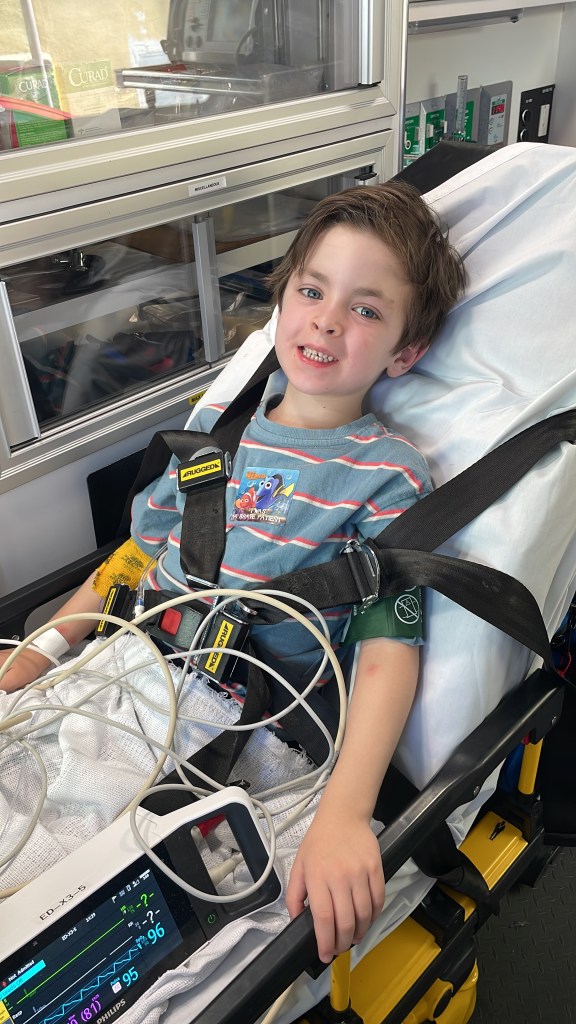
    Three Hospitals, two ambulances and 1 bumper knocked off a parked car later…

    The U.S. Hospital couldn’t provide the required care as it was not something that they had dealt with often (we are screened medically to move abroad) so they wanted us transferred to the Italian system and into a hospital where it is their bread and butter.

    Driving is also pretty epic in this part of Italy and my poor husband had to drive into the city centre for the first time, whilst following an ambulance and reunite himself with us in two very large hospitals whilst not speaking the language. Super dad.

    T was hungry and tired, never a good combination. However, until his blood glucose levels were in a safe range, he couldn’t eat.

    Levels when tested in the U.S. hospital were >800mg/dL, which if you google it (don’t ever google) is a medical emergency. I thank my lucky stars that he hadn’t gone into diabetic ketoacidosis (DKA), as it could have been so much worse. The Italian system works in a different currency for blood glucose levels, and in the UK this is the equivalent of >44.4 mmol/L. Lots of fluids and insulin later, it was coming down but he still couldn’t eat anything until later that night in the University Hospital where we would stay for 9 nights.

    Italian Hospitals are very different to the U.K. and as we were so new to the country we found ourselves in rooms full of doctors and nurses that spoke a different language, it was overwhelming. Infrastructure isn’t the priority out here and there are no curtains in the wards which was quite a strange experience. However, the care was excellent and it was amazing how many of the doctors spoke English and using google translate and our pigeon Italian we got by.

    After more blood tests and a visit from what I can only assume was a registrar equivalent, we were told to await the results of the autoantibodies but his symptoms and random glucose result in their eyes was the diagnosis of Type 1 Diabetes. We were going to take it in turns to stay with T (there was a chair next to his bed) but I stayed the first night. Dad did the 50 minute round-trip to get us more home comforts and we discovered how strict Italian Hospitals were with visiting hours when, upon his return, he wasn’t allowed back up to the ward. Another thing that set me off crying… Luckily the security guard went off for a cigarette so we both went back upstairs to see T before being dad headed back home again.

    It’s only writing this down that has made me reflect on what a crap day it was. However, it never ceases to amaze me, the care that healthcare professionals provide, despite having worked in that sector for so long. There we were, in someone else’s country and all they cared about was getting T safe clinically and all the while apologising for their English.

    I’m going to leave this essay there and perhaps I will touch on our time in the Italian system in another post.

    L x
    Leave a comment

  • No Carbs before Marbs

    No Carbs before Marbs

    Just kidding, we are all about the carbs in this household!

    What are carbohydrates?

    Let’s start with the basics…

    Carbohydrate is one of the 3 macronutrients (the others being fat and protein) that make up our diet. Each of the macronutrients have different purposes which are equally important but for today we will focus on carbs.

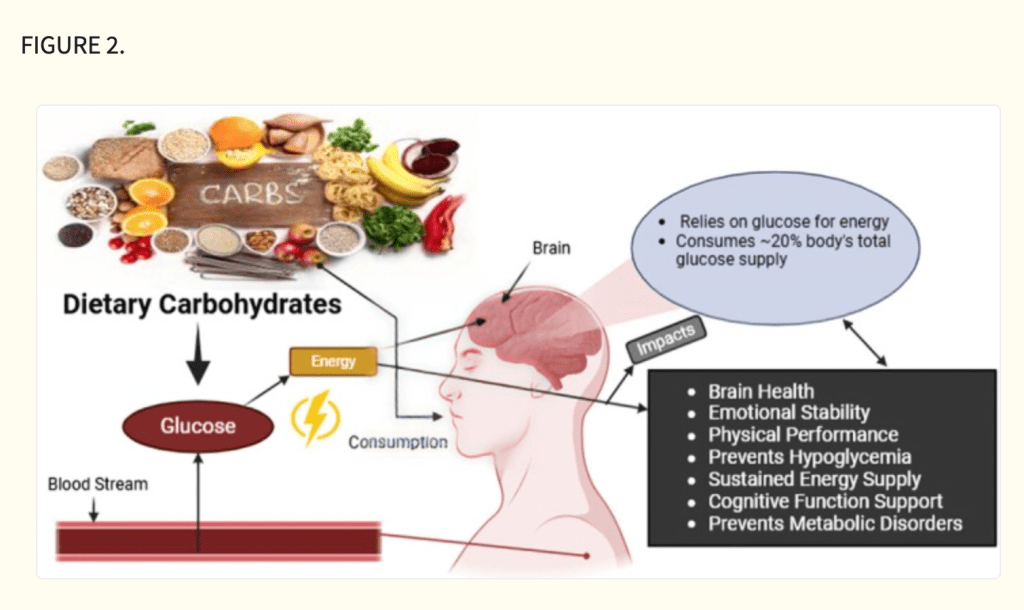
    Carbohydrates are the biggest source of energy from our diet and most importantly are the brain’s main energy source. All cells in our body require glucose (a breakdown product of carbs) to function.

    I was about to draw a picture to demonstrate the importance of carbs for the brain, but then I found a great review by Arshad at al. 2025. Why re-invent the wheel?

    As you can see, there are so many benefits to carbohydrates and we need them to function, therefore, why restrict them?

    Arshad et al. 2025

    I think it is safe to say that carbs get a bad rep a lot of the time. When people think carbs, they think cakes, biscuits and bread. There is more to it than that.

    I was at the risk of turning this into a chemistry lesson, so for the purpose of this post, carbs are broken down into three main groups based on how quickly they affect blood glucose levels:

    • Simple sugars
      • Sugar, honey, lactose and fructose to name a few
    • Starchy carbohydrates (complex carbs)
      • Rice, pasta, bread, corn and potatoes.
    • Fibre (our body can’t fully digest)
      • Wholegrains, fruit and veg etc.

    Essentially, the most important sources of carbs to include in our diet are the complex carbs and fibre as they are great energy sources but break down slowly (compared to simple sugars) allowing for longer-lasting energy.

    In the UK, recent government guidance for the early-years group, state that a child’s diet should be made up of the 4 main food groups:

    • Fruit and Vegetables
    • Starchy Carbohydrates
    • Dairy/Dairy-alternatives
    • Protein

    A source of starchy carbs should be included in all meals and ideally children should acquire around 50% of their energy requirements from this source.

    Carbohydrate Counting

    Why have I just been discussing carbs?

    You may have heard the term ‘carbohydrate counting’ when thinking about diabetes. It is deemed to be one of the most effective ways to manage Type 1 Diabetes (T1D) with the concept first being derived in the 1920’s (Gillespie et al. 1998). It allows a person flexibility with eating and the ability to match insulin to the amount of carbs eaten, instead of having to eat the same thing every day.

    To be able to use this method, a ratio of the amount of insulin per gram of carbohydrate is required. This was derived by the specialists at the hospital when T started on an insulin pump.

    Why carbs? They are known to the be main food influencer that impacts on blood glucose levels.

    Whilst it sounds simple (amount of carbs = amount of insulin to be given) it’s not quite that simple.

    Carb ratios can change with age and they can also be different at different times of the day. T has 4 different ratios during the day depending on how resistant to insulin he is at that time (maybe for another post!).

    Ratios are different for different people and T’s have changed multiple times already.

    Also, different carb-containing foods can affect blood glucose levels at different speeds (i.e. glycaemic index and whether the food contains protein or fat which slows down digestion). That’s definitely for another post.

    Things that might help with carb counting

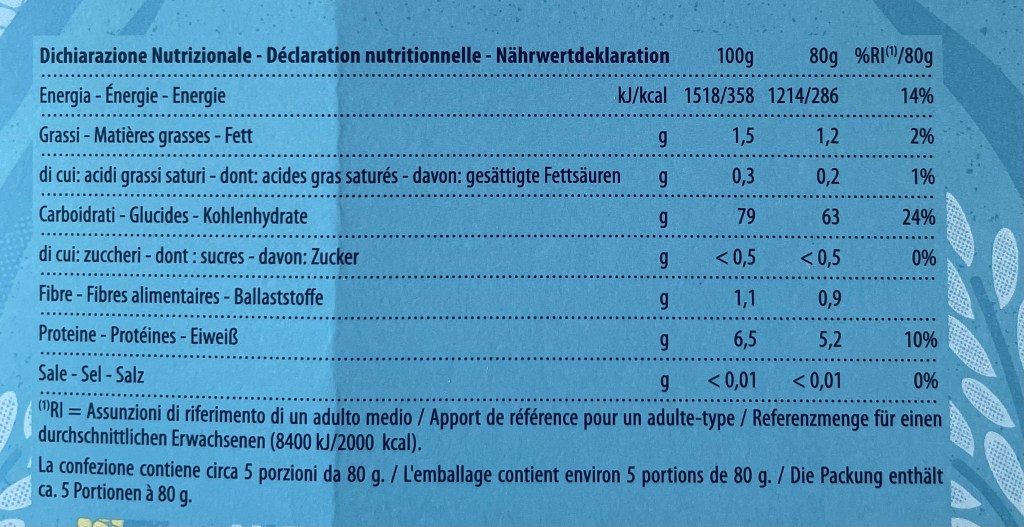
    • Nutrition labels
    • Scales
      • I’m not embarrassed to ask friends at their house and no one has questioned it. It makes life easier!
    • Using household measurements
      • Measuring cups/mugs/small bowls
    • Practice with common meals
      • I know that 4 fish fingers have 13g grams of carbs – I am that cool!
    • Apps/books
      • The trusty Carbs and Cals app/book
    • Practice, practice, practice (and hoping for the best)

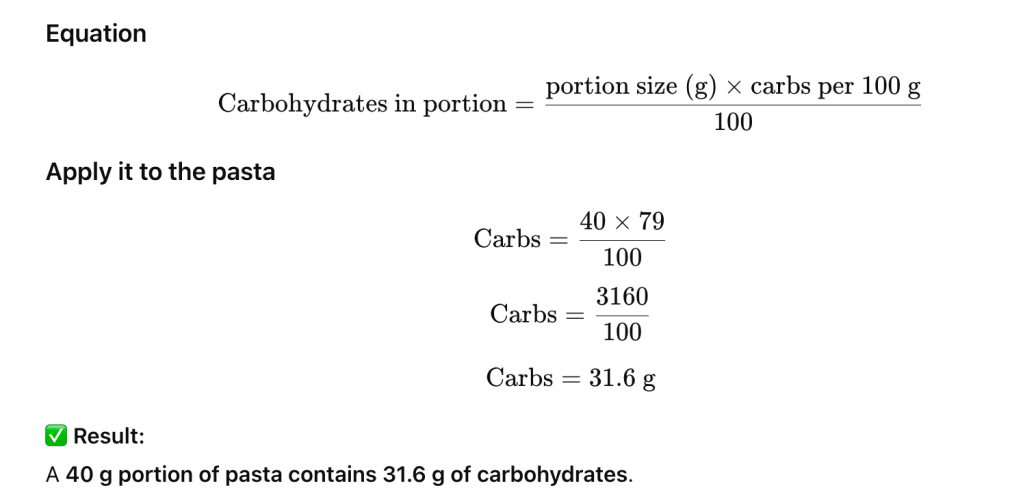
    Be cautious when reading food labels. Most of the time it is written per 100g of the product so you will need to work out the portion that you have. Another word of warning, check if it is per 100g of cooked or uncooked product as well!

    Carb counting when eating out

    Eating at home is one thing but eating out is a whole different kettle of fish….

    We may have been doing this for 6 months but eyeballing a bowl of food to guess the weight of it does not come easily to me, even with the use of an app. We have always under estimated the amount of pasta in the bowl (the Italian’s don’t do kids portions).

    I’m hoping that with practice it will get easier. I did once have the idea of cooking different amounts of pasta at home and taking photos using a bowl that I knew the size of and writing down the weight and amount of carbs in it. Did I do it though? No, of course I didn’t.

    Why we don’t restrict foods in this household

    Let’s face it, the easy thing to do would to be to limit the amount of carbohydrates in the diet. In simple terms, less carbs = less insulin.

    However, it isn’t quite as simple as that. Two, T is growing and requires carbs (glucose) to be able to do so. Three, where is the fun in that? Already so much has changed for him in his childhood and we already limit the number of times that he eats during the day (he used to be a serial snacker so we have limited it to two snacks and three meals), we can’t deprive him of everything yummy.

    Yes, we do limit specific foods more than we used to but we try not to say no all of the time. I used to be the dietitian that worked on the premise of everything in moderation because the more you restrict something, the more it is desired.

    We don’t say no to the amazing Italian pizza that the school gets in on a Wednesday. Yes, it was stressful initially but working with the dietitians in Birmingham and coming up with a strategy to split the insulin dose, it is less stressful.

    Yes, T did previously have cake/biscuits most days and now he doesn’t. Cake tends to now be reserved for birthday parties or school events where everyone else is having it. Sweets are very rarely consumed these days, only if we are out where other kids are having them. We also think about the timing, during the day is preferable to the evening – it’s not great going to bed with glucose levels sky-high!

    We now don’t have things like cake or sweets in the house (if we do, they are very well hidden). We don’t want to be the parents that say no to everything but we do know that if we say ‘yes’, we usually pay for it later and have a stressful time managing high glucose levels.

    We carry the stress so that T doesn’t have to.

    So, if you see me asking for scales or studying packaging, it’s not because I have nothing better to do with my time, I am just trying to make my life a little bit easier.

    Lx

  • Stayin’ Alive

    Stayin’ Alive

    T’s diabetes care is now under Birmingham Children’s Hospital. This was done for a few reasons (mostly Brexit) but essentially as we will be moving back to the UK after 3 years, the right thing to do was to get him under a UK team for continuity.

    Before I go any further, I need to acknowledge the team and how amazing they are. Imagine having a 24/7 phone number that you can call and speak to a specialist nurse, that’s what we have. It’s been a game changer in T’s care, no judgement when you call at 2am to ask for advice. These healthcare professionals are amazing.

    The only catch with being under a UK team is that trips back to the UK are required, not only to see the team in-person but also to collect his Continuous Glucose Monitor’s (CGMs) and insulin pumps for the next 6 months. It isn’t possible to have them sent straight out to Italy.

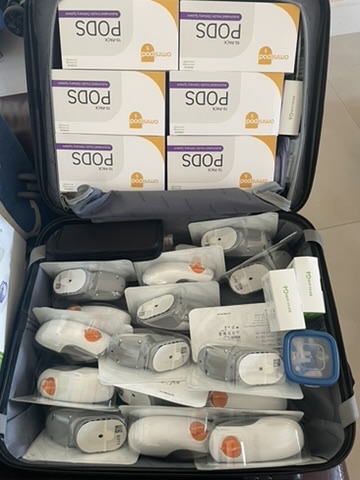
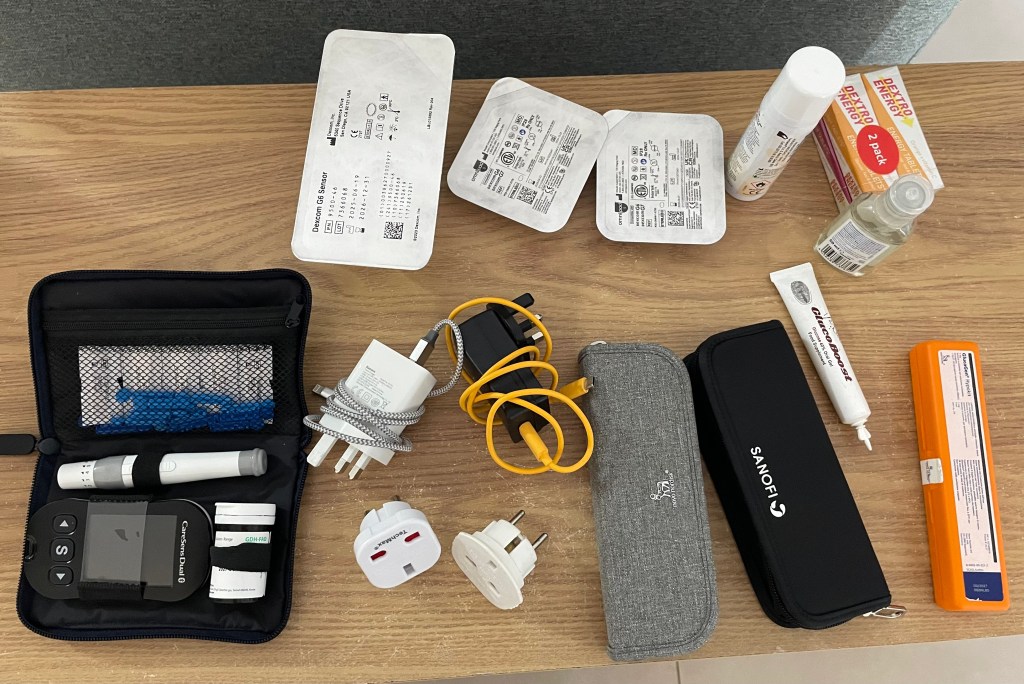
    We recently made one of these trips back to the UK so I thought I would give some insight into what this looks like and how much equipment is required for 6 months:

    A 6 month supply of CGMs and Insulin pumps

    Airport and Equipment

    It’s important to check with the company that manufactures the equipment that you might use as to whether it can go through airport scanners.

    To date, our experiences of airport security and travelling with lots of diabetes kit has only been positive, fortunately.

    When flying back to Italy both times, we have been travelling with with a 6 month supply of CGMs and insulin pumps, as you can see from the photo above, that is a lot of stuff.

    Unfortunately, it isn’t as simple as packing it all in hold luggage. Firstly, what happens if the bag goes missing?! Secondly, the CGMs and insulin pumps can’t go through x-ray scanners and thirdly, the temperature drops so much in the hold of an aircraft, it all needs to go in hand luggage. The effect of temperature dropping is especially true for insulin – it will freeze in the hold meaning that it cannot then be used.

    As mentioned, the general advice for CGMs and insulin pumps is that they can’t go through x-ray machines and this is also true when it is in hand luggage. It needs to be taken out of the bag and decanted into a tray which is taken away and each item is individually swabbed for explosive residue. Yes, we are THAT family holding up the queue!

    On this trip back I thanked the lady who swabbed it all and apologised for the sheer volume, explaining our situation. I continue to be surprised by the kindness of strangers, her response was that she was happy to do it and she even commented that we all need different things to keep us alive. How very true!

    Another thing to consider is the type of scanner that we all walk through at Airport security. Gatwick now have the full body scanners which pumps and CGMs can’t go through. However, the websites that I have managed to look at do suggest that metal detectors are OK.

    In our case, all I needed to do was explain to the security guard that T was wearing the CGM and the pump and they did a pat-down with his consent and swabbed his hands for residue. If you don’t ask, you don’t get!

    Airlines and Type 1 Diabetes

    All airlines have different policies for Type 1 Diabetes (T1D). All you have to do is goggle ‘Type 1 diabetes and flying’ and see newspaper articles about people being asked to leave the plane (before take off obviously) because their blood glucose was too low.

    However, did you know that people with T1D can actually become commercial airline pilots now?

    Anyway, I digress. The main reason that I am writing this section is because you are entitled to (free) hand luggage for medical equipment. Different airlines have different policies so it’s worth checking it out. We were flying back with easyjet, a quick email to them to explain the situation and, at no extra cost, they added on another larger hand luggage bag for T’s medical equipment. They were very specific about the need for a medical letter though and also what needed to be included in the letter. They also pointed out that nothing other than diabetes kit could be in the bag… fair enough.

    The GP letter wasn’t even looked at, sorry Doc (especially after sending a detailed email about everything needed in it!), but if you need to request a letter in the UK to travel elsewhere, I would advise keeping in mind how long it might take for a GP to produce the letter.

    Flying and Insulin Pump

    It was only the second time that we have flown since T has had an insulin pump, but both arriving in the UK and Italy, he either had a hypo (low) on the plane or just after landing…. The first time it took us by surprise as levels had been great during the flight.

    After looking into this a bit more, I wanted to share my findings.

    Why does it happen?

    Pressure – during take-off/landing the cabin pressure changes. In some situations, it can cause the pump to over-deliver insulin (therefore causing a hypo). Some websites suggest disconnecting your pump during these times, however with an omnipod (T’s insulin pump) that isn’t possible…

    Some research in a hypobariac chamber showed that insulin pumps can over- or under- deliver by up to 1/2 unit of insulin during take off and landing and this was to do with bubble formation (Bertuzzi et al. 2017). However, this research is now 8 years old, I would like to think that manufacturers have taken this information and enacted some changes in their equipment.

    More recent research looked at the use of insulin pumps on pilots using real world data in a retrospective study. Garden et al. 2025 concluded that insulin pumps are endorsed for use by airline pilots due to their clinical benefit but do acknowledge that insulin pumps did have bubble formation in flight simulation scenarios.

    The take home message… it’s important to keep an eye on the numbers during a flight, especially during take-off and landing.

    We haven’t done a long-haul flight yet and I’m not sure I have it in me at the moment to navigate more than one meal whilst in the air but one day it will come. As ever, the theme seems to be, prepare for the unexpected as it will probably happen. Take that extra vial of insulin, take that extra CGM and insulin pump. I think recent events in the world and people being stuck in the Middle East also cement this advice. What happens if the flight doesn’t go and you have to wait another few days to get home, do you have enough equipment?

    Overall, the trip back to the UK was a success and we even managed 2 trips to Wagamama’s, a favourite of T. It also helps that Wagamama dishes (as well as a lot of high street chains) are on the Carbs and Cals app. Another plug for this app (not an ad, I just highly rate it) and its accompanying book.

    https://carbsandcals.com/

    Until next time.

    Lx

  • Operation Relentless (not talking about CASD)

    Operation Relentless (not talking about CASD)

    Definition of relentless = ‘showing or promising no abatement of severity, intensity, strength, or pace’ (Merriam-Webster).

    I was going to write my next post about our recent trip back to the UK for T’s review. However, that can wait. I wanted to write about the relentless nature of diabetes. As mentioned previously, it is a 24/7 job and when you think that you are getting on top of things and that things are going well, it likes to kick you back down again.

    After T’s diagnosis I did a walking event for Diabetes UK (I signed up for it in the middle of the night during his first night in hospital) and the tagline was ‘Diabetes is Relentless. So are we.’ At the time, I didn’t comprehend just what it meant.

    During our recent trip to Birmingham to see the specialist team lots of things happened and overall it was really positive. I will discuss it further in another post but essentially, since changes to his insulin to carb ratio (the amount of insulin he gets per gram of carbohydrate) had been made, we actually felt like his ‘time in range’ had improved. This was despite being away from home and out of routine.

    I’m not saying that control was perfect but it was certainly better.

    We arrived back home last night and it was so nice to see sunshine today. For context, we only had one day of sunshine during our trip over to the UK.

    So, after a planned insulin pump change this morning, off to the beach we went. We were meeting up with some other families and ended up playing cricket in the sunshine, a version of cricket at least. Levels were looking good, trickling down slowly over the morning. Too good to be true.

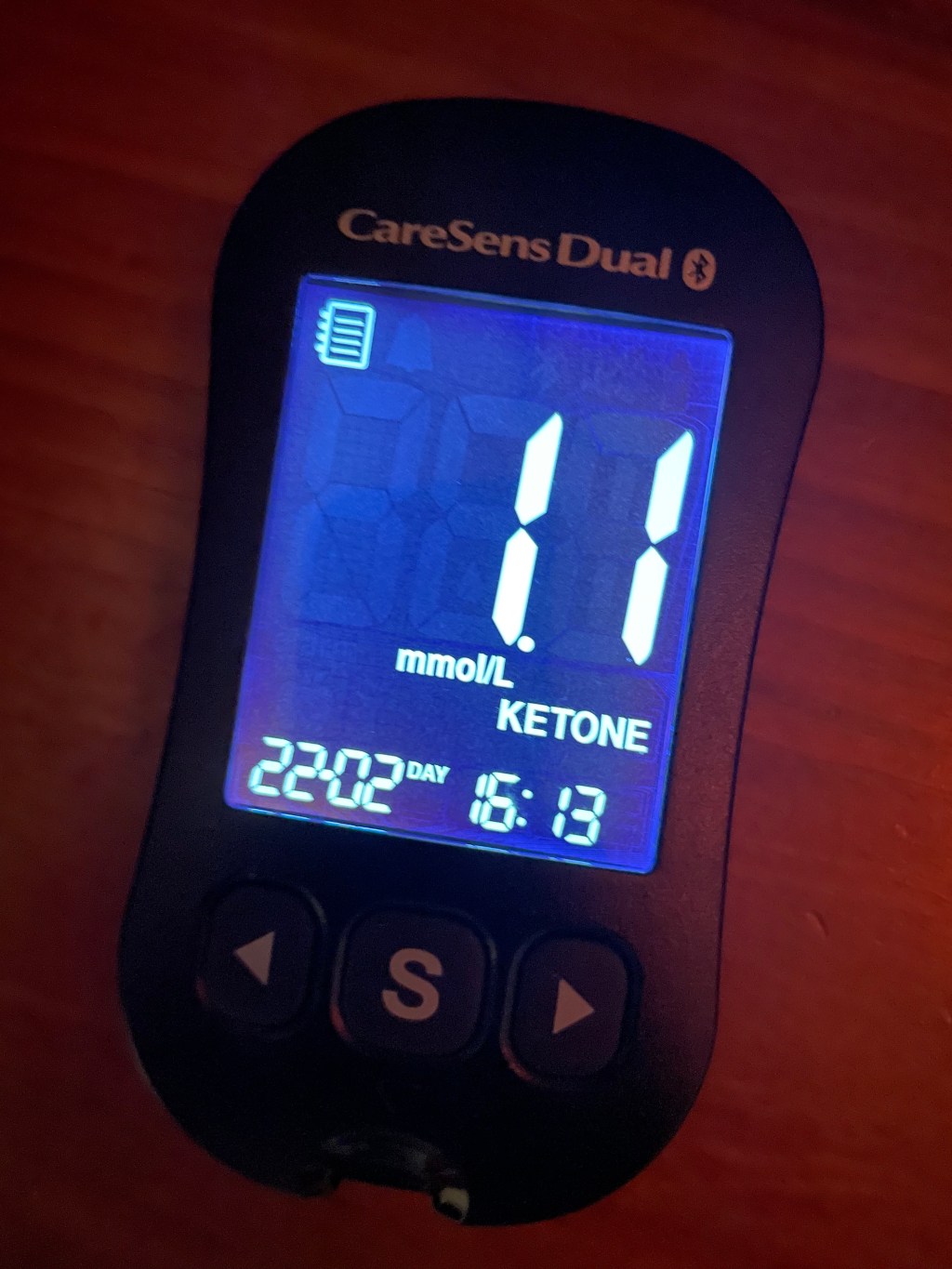
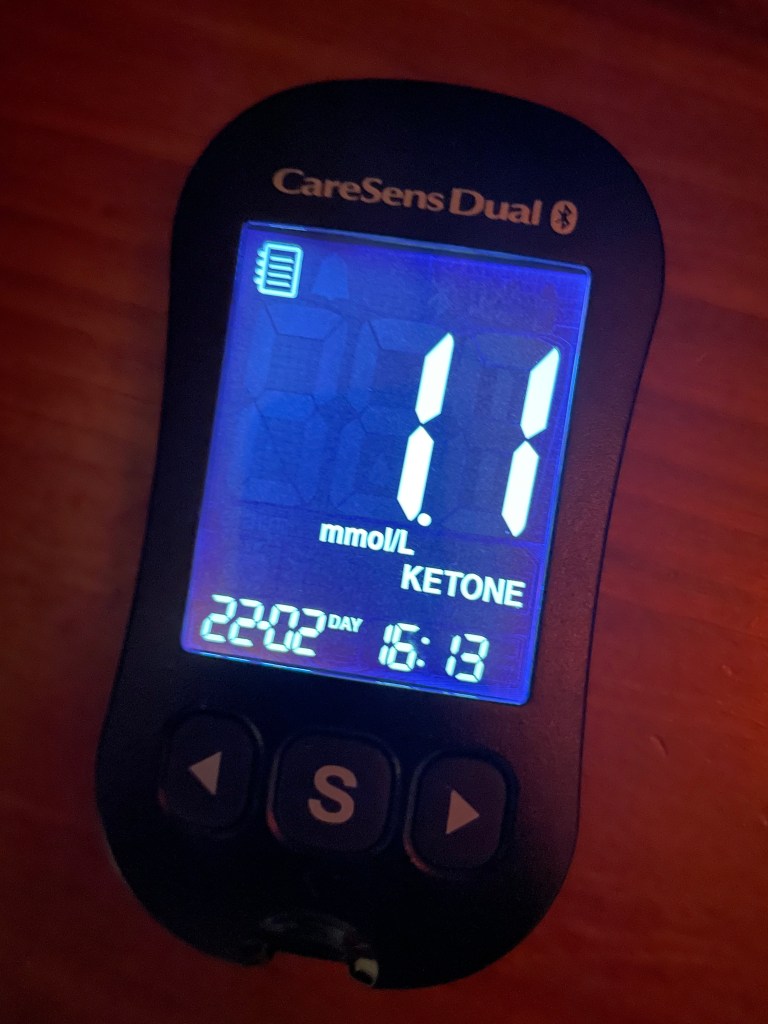
    After lunch at home, levels just kept rising. This isn’t abnormal – in the afternoon levels do tend to rise – but something didn’t feel right. We had to question whether the pump was working. So, a check of glucose levels and ketones = high glucose levels and for the first time, ketone levels of >0.6. Ketone levels of 1.1…. we hadn’t been here before.

    We did however know where to start… a call to the nursing team on the 24/7 line at the Children’s Hospital. Essentially, a change of insulin pump was required (this is the third time in 2 weeks that we have had to change the pump early because it wasn’t working) and hope that after an hour ketone levels came down enough. If they hadn’t we had been told that we needed to give an injection of insulin by an insulin pen. It had been a while since we had to do one.

    All’s well that ends well but it was just one of the curveballs thrown at us of late. A trip to the supermarket to buy pizza and chocolate helped…

    What doesn’t kill you makes you stronger, true, but it can also knock you down a peg or two.

    So, whilst families navigating this journey often look like they have it all together, it might just be the opposite. I’m not saying that it is true for everyone but I regularly feel like a swan.

    L x

  • Weekend Away – Travelling

    What have I learnt after our second weekend away since T was diagnosed with Type 1 Diabetes?

    Preparation is key and expect the unexpected.

    Diabetes Kit…

    Let’s start with what we packed for our 2 night trip (just for diabetes):

    • Glucose and ketone monitor
    • 2 x spare insulin pumps
    • 1 x spare Continuous Glucose Monitor (CGM)
    • 2 x Fast-acting insulin and pen
    • 1 x Slow-acting insulin and pen
    • Glucagon pen and gel
    • Chargers for omnipod reader and iphone (CGM reader)
    • Spare dextrose
    • Adhesive remover
    • Hand sanitiser

    You may think that this is a bit excessive for 2 nights away, let me assure you that it wasn’t and for once, I am very pleased that we were so well prepared.

    Rome

    We are lucky to only live an hour away from Rome (by train) and as we have been living in Italy for 6 months now, we decided to give a weekend trip a go.

    We were aware that the trip probably wouldn’t be without it’s stresses, but it was probably a bit more eventful that we expected.

    Before heading to the train station, we had a quick snack and pump change stop, we were excited and ready to go.

    Omnipod 5 insulin pumps last 72 hours, so it should last the weekend. Great timing, or so we thought.

    As you may be aware, Italy seems to be the carb capital of the world. Don’t get me wrong, I love carbs and to me a meal without carbs, is not a meal. However, guessing the amount of carbs in a bowl of pasta or a massive pizza is just hard. That’s even with the carbs and cals app (which is a life saver).

    We made it to Rome, checked in and went in search of food. As previously mentioned, eating out isn’t something that we do often anymore but we wanted to embrace the food culture this weekend and try and just go with it. First meal out for T = spaghetti with pomodoro. Yummy, he was super excited. Looked great and he wolfed it down, we actually thought that we did quite a good job with guessing the carbs, or not…..

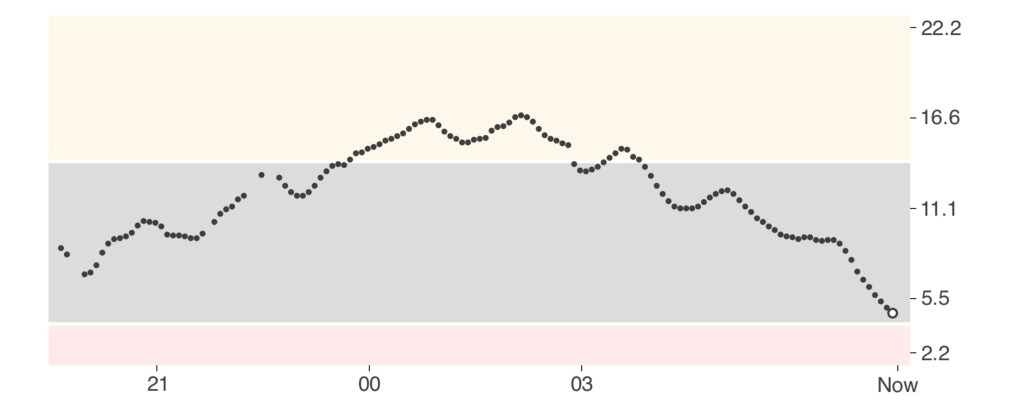
    Screenshot of the CGM readings for that night

    As you can see above, glucose levels were high for such a loooong time. Let me explain for those not used to looking at a Dexcom reading. We aim for levels between 4-10 mmol/L, the numbers that we talk about when discussing ‘time in range’.

    Anything above 14 mmol/L (the yellow section) really is high and is when you have to start worrying about whether ketones are building up. T was up there for over 3 hours, the longest it has ever been that high.

    Initially, we thought that maybe we had just underestimated the carb content of that pasta.

    When it hit 14mmol/L we gave the first correction (extra insulin) and glucose levels just kept going up…. what was going on?!?

    After 90 minutes, it was time to check blood glucose levels and for ketones. I’m not sure if you have ever had to wake a child up in the night but the guilt of having to do it to then stab their finger with a lancet is real. When they are crying half-asleep and angry at you. Luckily, T never seems to remember in the morning. Ketone levels were OK, so another insulin correction was given. Eventually after another couple of hours it started to come down but what was going on?!?! We couldn’t have gotten it that wrong, could we?

    Saturday morning (minus the hypo – the insulin must have kicked in at some point) started OK. Off to breakfast we went, things were looking good until 11am. Even had the audacity to think that we had cracked carb counting for that meal…. how wrong we were!

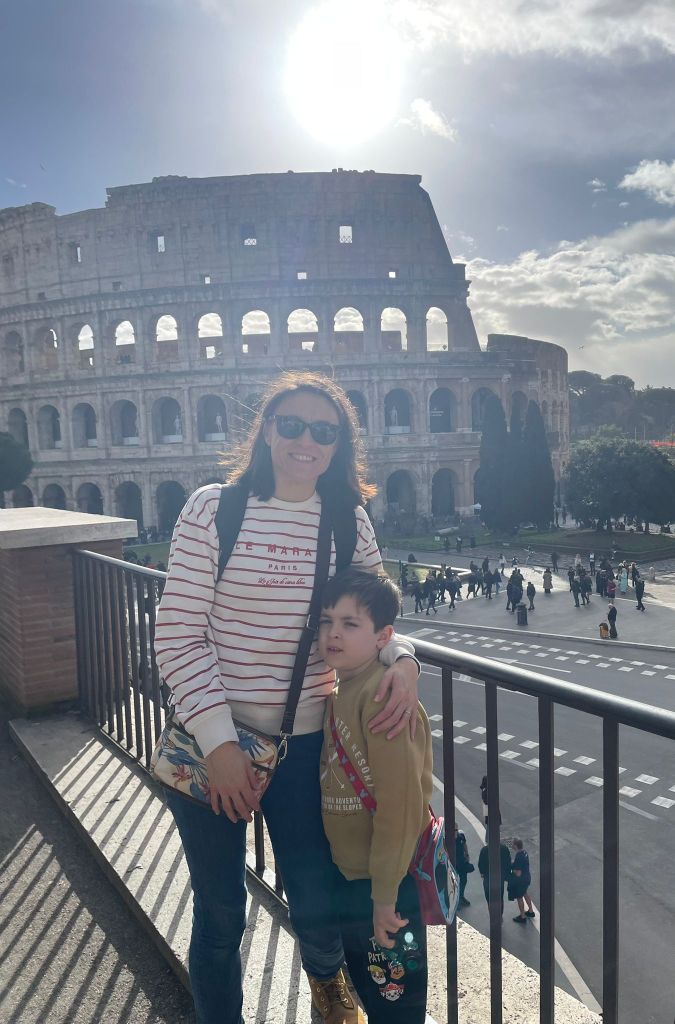
    We made it to the colosseum, had a snack (which we knew the carb content of) and the glucose levels starting to creep up again….. Out of the rest of the day, he only had glucose levels under 10mmol/L for only 20 minutes. Eeek. There goes our 77% time in range. What was going on? We had promised gelato, did he get gelato, no he didn’t. Did that make us feel awful? Yes, it did.

    We walked for miles…. Instead of using the hop-on, hop-off bus that we had paid for, we walked everywhere, in the rain. Walking is usually good for T at reducing glucose levels. We had been told that a 20 min walk can reduce levels by 2 mmol/L. Did they budge, not at all. What were we doing wrong???

    Eventually, we gave up and went back to the hotel. It had been hours and nothing was happening. It was time to consider changing the insulin pump. Hindsight is a wonderful thing and now as I write this I wonder why we didn’t change it earlier. We had never encountered this problem though. The pump obviously hadn’t been working.

    A panicked call to the diabetes nurses in the UK for reassurance, we had done the right thing and had to wait for the new insulin pump to do it’s job.

    It’s safe to say that we couldn’t face eating out again. Off to the supermarket to buy some bits to make a cheese sandwich (T wasn’t happy) and some cucumber (carb counting not needed). He eventually ate 2 hours later when levels were below 10mmol/L. Needless to say, we ended up falling asleep not long after T without any dinner.

    It had been a strange old day, on one hand we had seen some amazing sights, how lucky are we, but the underlying stress of things not going our way despite doing everything ‘right’ was epic.

    Sunday was a new day…

    Played breakfast as safe as we could so that T could get that gelato…. He had it, and enjoyed it. Yippee, mission complete. Despite over estimating carb content, up the glucose levels went. Oh boy…

    Skip to 4 hours later and after a lot of walking we finally managed a late lunch in Rome train station. There was a Wagamamas!! That cheered him up and even better, they have their meals on the ‘Carbs and Cals’ app. Levels were looking good. Ironic isn’t it, levels start to look good when you are heading home.

    I don’t mean to make it sound quite so negative, we did have a great time in Rome and can’t wait to go back. I struggle with the guilt of having to say ‘no’ to things, especially food. Gone are the days of nipping into a cafe/restaurant for an early lunch when it is tipping it down, instead we carry on with that walk. Food is everywhere is Rome and I can’t imagine how that must feel to a 5 year old diabetic…. Comments like ‘I wish I didn’t have diabetes so I could eat what I want’ gives me some idea though.

    I will never stop being proud of how T is managing overall.

    On a side note, Italian trains are great! They run on time and you get a seat. Completely different to the UK….

    Take away message

    Be prepared for anything!

    Take that spare insulin pump (and another for luck in case it doesn’t prime). We weren’t expecting to have to change it after 24 hours be there we were.

    Phone numbers – take them for your diabetes team for questions/support. We are so fortunate to be under the care of Birmingham Children’s Hospital and they have a 24/7 number.

    Carry spare insulin, both fast and slow-acting, you never know when you might need them. I once dropped a vial on the hard floor getting it out to read the name to the GP and it cracked. In the heat of the moment, slips and accidents happen.

    Take lots of ketone and glucose testing strips. We went through 6 ketone strips in 2 days….

    Most importantly, enjoy the experience (as much as you can).

    L x

  • Beyond The Numbers

    Why this name?

    If you are currently living with diabetes or supporting someone with the condition, you will be aware of the many numbers:

    • Blood glucose levels
    • HbA1c (average glucose levels over the past 3 months)
    • Time in range
    • Carbohydrate counting (how many carbs are in a food/meal)
    • Insulin units
    • Correction doses

    In a professional capacity I was of course aware of blood glucose levels and HbA1c but I learnt about the others pretty quickly.

    New technology that has been developed to support and manage Type 1 Diabetes such as continuous glucose monitors (CGM) and insulin pumps are life changing but they also mean that you are constantly surrounded by numbers, alarms, screens and target ranges. It can be overwhelming.

    Whilst numbers are both important and essential, over the past 5 months we have started to learn that they are not everything. Numbers do not tell the whole story…

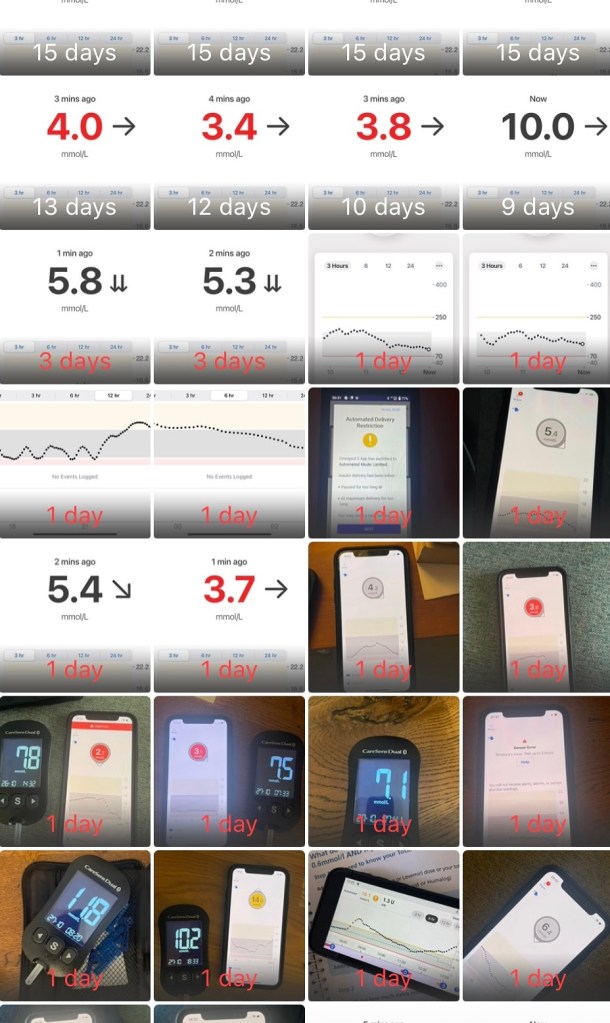
    What the deleted photo section of my phone looked like from the early days

    In the early days, we put so much pressure on ourselves to get it right all the time; thriving to hit the targets, avoid the hypo’s (low blood glucose levels) and hyper’s (high blood glucose levels). However, it wasn’t sustainable.

    If I am being honest, I think that I felt the pressure more as a healthcare professional (currently on a career break). Quite a few people commented about how lucky T was to have a Dietitian as a mother. Full disclaimer, since qualifying as a dietitian I have done little in the world of diabetes other than supporting patients that may also have diabetes. If a patient with Type 1 Diabetes required input, they would always be signposted back to their specialist team. I specialise in oncology which is very different. Therefore, whilst people assumed that I knew a lot, all I needed was to be treated like a mother with no clue and limited knowledge.

    What the numbers don’t show

    The constant decisions – it is estimated that an extra 180 decisions a day are made for a Type 1 Diabetic (Stanford Medicine, 2014).

    • Insulin timing
    • Whether running about in play park is OK and not going to send levels plummeting
    • Whether letting T have the birthday cake at the party is OK, never mind having to guess what the carb content of the cake is…. (still yet to get this one right)

    The hypo’s avoided – the time in range may look good but it doesn’t show that having that having the target set to 6.1 mmol/L will sometimes cause the pump to over shoot, meaning that we need to step in and give dextrose tablets to prevent that hypo.

    The interrupted sleep – waking up to the CGM alarm going off alerting you to a hypo and then having to wake your child up at 3am to give them dextrose tablets half asleep. I wake up most nights at least once a night to check what his levels are.

    The constant maths – carb counting 5 times a day (T likes to eat). Eating out has become a source of stress, and trips to cafes and restaurants are no longer a thing. I’m not looking for sympathy as we are fortunate to be able to afford to eat out, but when you have to wait for the food to arrive to be able to guess the carb content before asking your child to look at it for 10 minutes whilst they wait to eat, it is just stressful and not really fair. The Italians also don’t do kids’ portions, and on one occasion, the bowl of pasta was never-ending and bigger than we originally thought. Cue meltdown in the restaurant as we were trying to get T to stop eating, as we hadn’t given enough insulin.

    https://carbsandcals.com/ – this book and app I would recommend as it has helped with carb counting

    The finger pricks – because you don’t trust the CGM reading or it decided to stop working. Some days we do none and some days you run out of fingers to prick.

    Changing insulin pumps and CGMs – this is done every 3 and 10 days respectively and whilst we know that it means he doesn’t have to have 6 injections a day, to a 5 year old it is rubbish.

    The stress of waiting to eat – honestly, the frustration at having to wait 10 minutes is probably the biggest source of stress in our house. Before any snack or meal, T always questions how long he will have to wait to eat, even though he knows that it is 10 minutes. We have suggested things to fill the time (colouring/playing a game/watching an episode of a favourite programme) but it is always met with resistance.

    Mental load and anxiety

    • Decisions made (did I do the right thing?)
    • Alarms going off in the middle of the night. It is a hypo or just a pressure low where he has been lying on his sensor?
    • When diabetes just doesn’t want to play ball and you have been dealing with a stubborn hyper for 90 mins, give a bit more insulin, do some running around and then suddenly levels start to drop like a stone and you are then worried about a hypo
    • The fact that you can do exactly the same thing two days in a row and get completely different results. I read somewhere that Type 1 Diabetes is like sitting an exam but by the time you have finished answering the questions, the questions have changed. Sounds about right…

    The enforced activity – the 0830 trips to the play park on a Sunday morning as high glucose levels just won’t shift. Sometimes, a walk can be more effective at shifting those stubborn hyper’s

    The guilt – when he is crying about how much he hates diabetes or if we have had to say ‘no, you can’t have that snack yet as your levels are too high’ or ‘no, you can’t run off and play yet as you are about to have a hypo’. As parents, I think it is safe to say that that we feel guilt and would do anything to take the hurt away from T.

    I haven’t written this post to just complain or to make people feel sorry for us. I am writing it for the people also living the Type 1 Diabetes life to say that we see you and we get it.

    For those not directly living it, it’s about raising awareness of Type 1 Diabetes, what it entails and to highlight that the number on the screen is only just the start.

    Diabetes is a 24/7 job and a constant worry. We are 5 months into this lifelong journey and only starting to get to grips with things. Despite some days being harder than others, it never ceases to amaze us how resilient a 5 year old can be and at the end of the day, we still love a dance party (sorry to our neighbours for soda pop and zoo, the current favourite songs, for being on repeat).

    L x