Just kidding, we are all about the carbs in this household!
What are carbohydrates?
Let’s start with the basics…
Carbohydrate is one of the 3 macronutrients (the others being fat and protein) that make up our diet. Each of the macronutrients have different purposes which are equally important but for today we will focus on carbs.
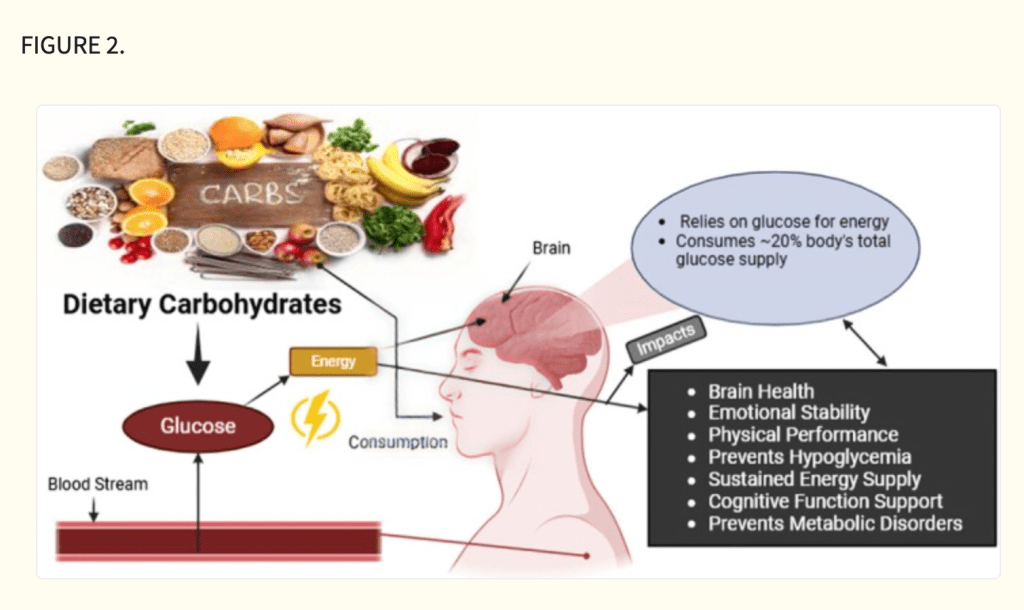
Carbohydrates are the biggest source of energy from our diet and most importantly are the brain’s main energy source. All cells in our body require glucose (a breakdown product of carbs) to function.
I was about to draw a picture to demonstrate the importance of carbs for the brain, but then I found a great review by Arshad at al. 2025. Why re-invent the wheel?
As you can see, there are so many benefits to carbohydrates and we need them to function, therefore, why restrict them?
I think it is safe to say that carbs get a bad rep a lot of the time. When people think carbs, they think cakes, biscuits and bread. There is more to it than that.
I was at the risk of turning this into a chemistry lesson, so for the purpose of this post, carbs are broken down into three main groups based on how quickly they affect blood glucose levels:
- Simple sugars
- Sugar, honey, lactose and fructose to name a few
- Starchy carbohydrates (complex carbs)
- Rice, pasta, bread, corn and potatoes.
- Fibre (our body can’t fully digest)
- Wholegrains, fruit and veg etc.
Essentially, the most important sources of carbs to include in our diet are the complex carbs and fibre as they are great energy sources but break down slowly (compared to simple sugars) allowing for longer-lasting energy.
In the UK, recent government guidance for the early-years group, state that a child’s diet should be made up of the 4 main food groups:
- Fruit and Vegetables
- Starchy Carbohydrates
- Dairy/Dairy-alternatives
- Protein
A source of starchy carbs should be included in all meals and ideally children should acquire around 50% of their energy requirements from this source.
Carbohydrate Counting
Why have I just been discussing carbs?
You may have heard the term ‘carbohydrate counting’ when thinking about diabetes. It is deemed to be one of the most effective ways to manage Type 1 Diabetes (T1D) with the concept first being derived in the 1920’s (Gillespie et al. 1998). It allows a person flexibility with eating and the ability to match insulin to the amount of carbs eaten, instead of having to eat the same thing every day.
To be able to use this method, a ratio of the amount of insulin per gram of carbohydrate is required. This was derived by the specialists at the hospital when T started on an insulin pump.
Why carbs? They are known to the be main food influencer that impacts on blood glucose levels.
Whilst it sounds simple (amount of carbs = amount of insulin to be given) it’s not quite that simple.
Carb ratios can change with age and they can also be different at different times of the day. T has 4 different ratios during the day depending on how resistant to insulin he is at that time (maybe for another post!).
Ratios are different for different people and T’s have changed multiple times already.
Also, different carb-containing foods can affect blood glucose levels at different speeds (i.e. glycaemic index and whether the food contains protein or fat which slows down digestion). That’s definitely for another post.
Things that might help with carb counting
- Nutrition labels
- Scales
- I’m not embarrassed to ask friends at their house and no one has questioned it. It makes life easier!
- Using household measurements
- Measuring cups/mugs/small bowls
- Practice with common meals
- I know that 4 fish fingers have 13g grams of carbs – I am that cool!
- Apps/books
- The trusty Carbs and Cals app/book
- Practice, practice, practice (and hoping for the best)
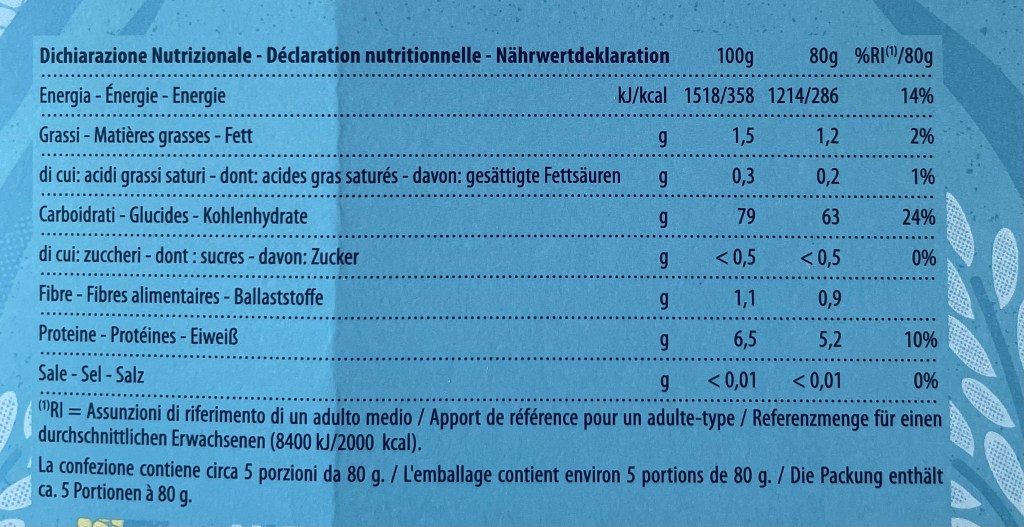
Be cautious when reading food labels. Most of the time it is written per 100g of the product so you will need to work out the portion that you have. Another word of warning, check if it is per 100g of cooked or uncooked product as well!
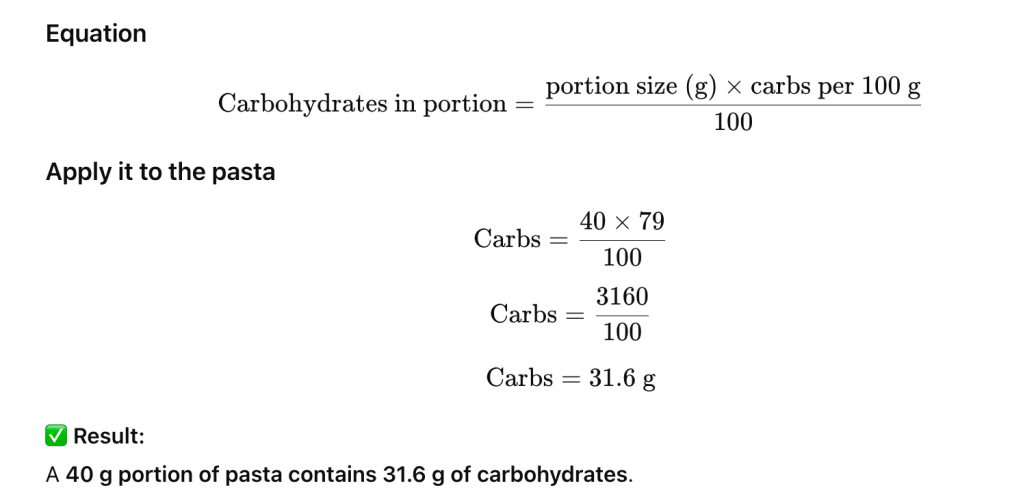
Carb counting when eating out
Eating at home is one thing but eating out is a whole different kettle of fish….
We may have been doing this for 6 months but eyeballing a bowl of food to guess the weight of it does not come easily to me, even with the use of an app. We have always under estimated the amount of pasta in the bowl (the Italian’s don’t do kids portions).
I’m hoping that with practice it will get easier. I did once have the idea of cooking different amounts of pasta at home and taking photos using a bowl that I knew the size of and writing down the weight and amount of carbs in it. Did I do it though? No, of course I didn’t.
Why we don’t restrict foods in this household
Let’s face it, the easy thing to do would to be to limit the amount of carbohydrates in the diet. In simple terms, less carbs = less insulin.
However, it isn’t quite as simple as that. Two, T is growing and requires carbs (glucose) to be able to do so. Three, where is the fun in that? Already so much has changed for him in his childhood and we already limit the number of times that he eats during the day (he used to be a serial snacker so we have limited it to two snacks and three meals), we can’t deprive him of everything yummy.
Yes, we do limit specific foods more than we used to but we try not to say no all of the time. I used to be the dietitian that worked on the premise of everything in moderation because the more you restrict something, the more it is desired.
We don’t say no to the amazing Italian pizza that the school gets in on a Wednesday. Yes, it was stressful initially but working with the dietitians in Birmingham and coming up with a strategy to split the insulin dose, it is less stressful.
Yes, T did previously have cake/biscuits most days and now he doesn’t. Cake tends to now be reserved for birthday parties or school events where everyone else is having it. Sweets are very rarely consumed these days, only if we are out where other kids are having them. We also think about the timing, during the day is preferable to the evening – it’s not great going to bed with glucose levels sky-high!
We now don’t have things like cake or sweets in the house (if we do, they are very well hidden). We don’t want to be the parents that say no to everything but we do know that if we say ‘yes’, we usually pay for it later and have a stressful time managing high glucose levels.
We carry the stress so that T doesn’t have to.
So, if you see me asking for scales or studying packaging, it’s not because I have nothing better to do with my time, I am just trying to make my life a little bit easier.
Lx
 Beyond The Numbers
Leave a comment