Tag: family

  • From First Playdate to First Camp: Building Confidence with Type 1

    From First Playdate to First Camp: Building Confidence with Type 1

    Small Moments, Big Trust: Letting Someone Else Step In

    Two weeks ago, I asked a friend for a massive favour so that I could restart my Italian lessons. It doesn’t sound like a big deal—but it marked a huge first for me.

    It was the first time I left my child—my child with Type 1 diabetes—solely in someone else’s care (outside of school or my husband).

    To be clear, this wasn’t just anyone. It was a friend who works at his school and is fully trained to look after him. We’re part of a small UK community here, where the lines between friend and professional often blur. Even with that level of trust, it still felt nerve-wracking.

    Because this wasn’t just a playdate.

    It was me handing over a responsibility that, until that point, had lived entirely with me and my husband. Monitoring blood sugar levels. Giving insulin for meals. Constantly thinking, calculating, adjusting. It’s always there—running quietly in the background.

    And suddenly, I was stepping away from it.

    I wish I could say I handled it calmly.

    Instead, I double-checked everything as I was leaving the house.

    Had I packed his food? I’d already prepared it and worked out the carb count to make things easier.

    Had I included the notes so my friend could enter everything correctly into his device?

    Had I explained enough? Too much? Had I forgotten something important?

    I packed more supplies than necessary—meters, dextrose, insulin, even a spare pump. I gave instructions that felt both too detailed and not detailed enough.

    And then came the hardest part: I left.

    Having somewhere I needed to be helped push me out the door—but it didn’t quiet the noise in my head.

    The moment the door closed behind me, the doubt rushed in.

    Had I done enough? Said enough? Prepared enough?
    Was I being a bad mum for leaving him so I could go to a lesson?

    This is the side of Type 1 diabetes people don’t always see. It’s not just numbers, devices, or routines. It’s the constant mental load—the invisible thread that keeps you tethered, even when you’re not physically there.

    Letting go, even a little, feels unnatural.

    I checked the Dexcom Share app (which lets you see glucose levels remotely) more than I’d like to admit. But there were no emergencies. No frantic calls. Just a few updates, a couple of photos—and, best of all, a happy child who had simply… had fun.

    Squirrel Camp: One Brave Night, One Giant Leap in Confidence

    Just three days later, we faced another big first: Squirrel Camp.

    The excitement was huge. You might think the successful playdate would have made this easier—but it didn’t, not really.

    There was an added safety net: my husband was there as a volunteer, camping alongside the kids. Logically, I knew he’d be on top of everything. But the worry wasn’t really about who was there.

    It was about what it meant.

    A full night away. A new environment. And me not being the one listening out for alarms in the middle of the night.

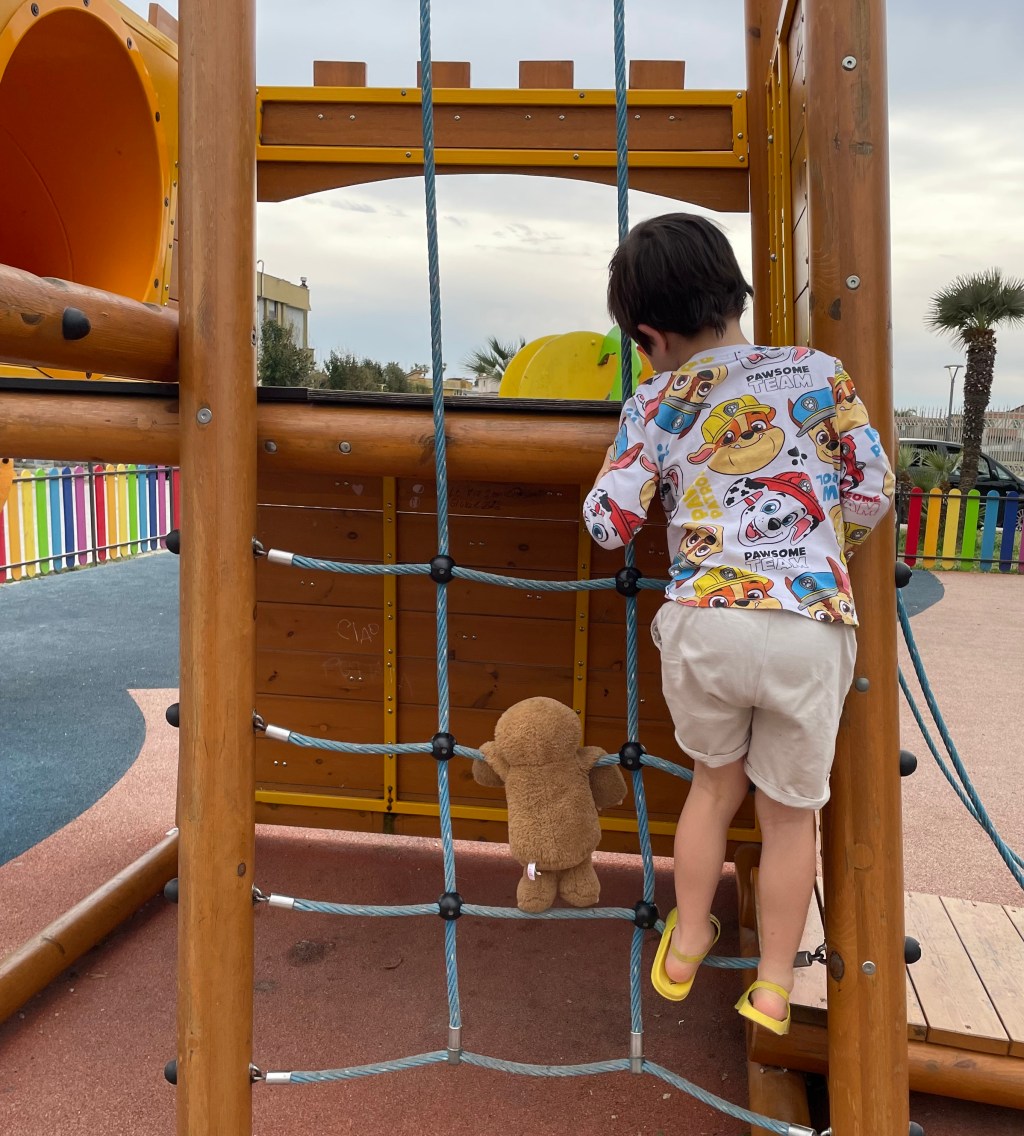
    We packed everything—then packed more. Spares for spares, and what felt like endless packets of dextrose. In our minds, my husband would be preventing hypos left, right and centre. In fact, the opposite happened. I can’t comment on the ins and outs but an insulin pump being knocked off in the play park was just one of the things that was contended with.

    And yet…

    T came home one very tired and very happy child.

    What an amazing experience and what a resilient little boy.
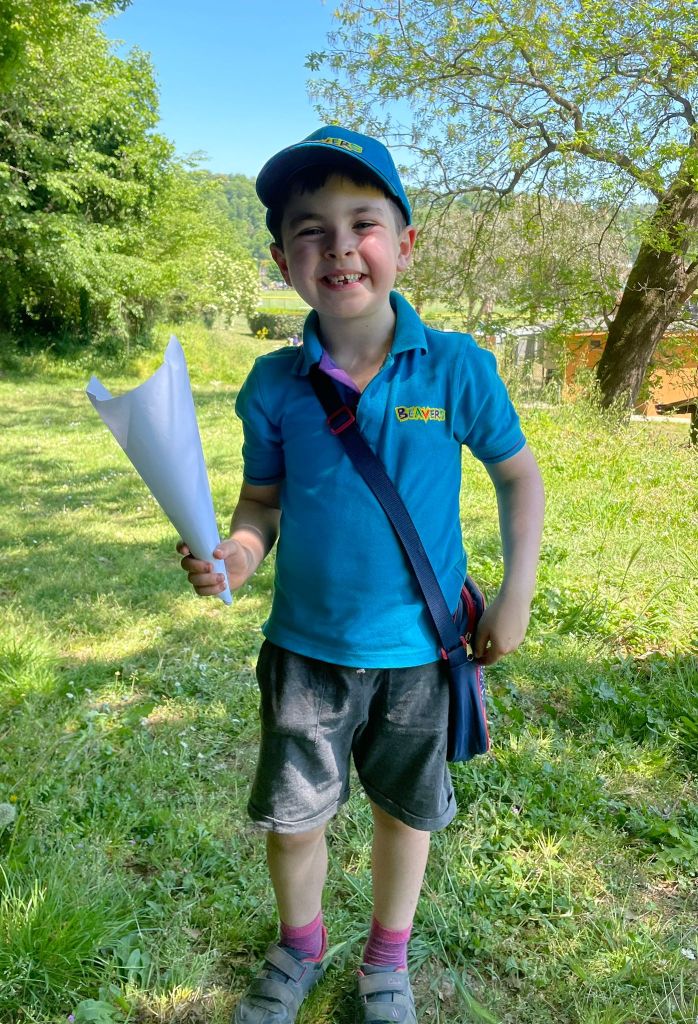
    Our goal is to provide as ‘normal’ a childhood as possible. To not let Type 1 diabetes stand in the way of him experiencing things like his friends.

    Yes, we have to think differently. Plan more. Adjust constantly. And, if we’re honest, carry a bit more stress.

    But why should he miss out?

    For now, that extra weight sits with us—until, little by little, he learns to carry it himself.

    And something is starting to shift.

    The worry hasn’t gone. I don’t think it ever will. But alongside it, something else is growing: confidence. Confidence to be able to say ‘yes’ to situations and trust others that care for your child.

    Because these “firsts,” as hard as they are, aren’t just moments of fear. They’re moments of growth.

    For them—and for you.

    L x
  • Our diagnosis: 3 weeks after moving to Italy

    Our diagnosis: 3 weeks after moving to Italy

    In August 2025 we moved to Southern Italy with my husband’s job. It was an exciting time, moving to live in the sun, near the beach and a place revolving around pizza, pasta and gelato.

    However, we could not have predicted the turn of events that would occur 3 weeks after moving country.

    1st September 2025

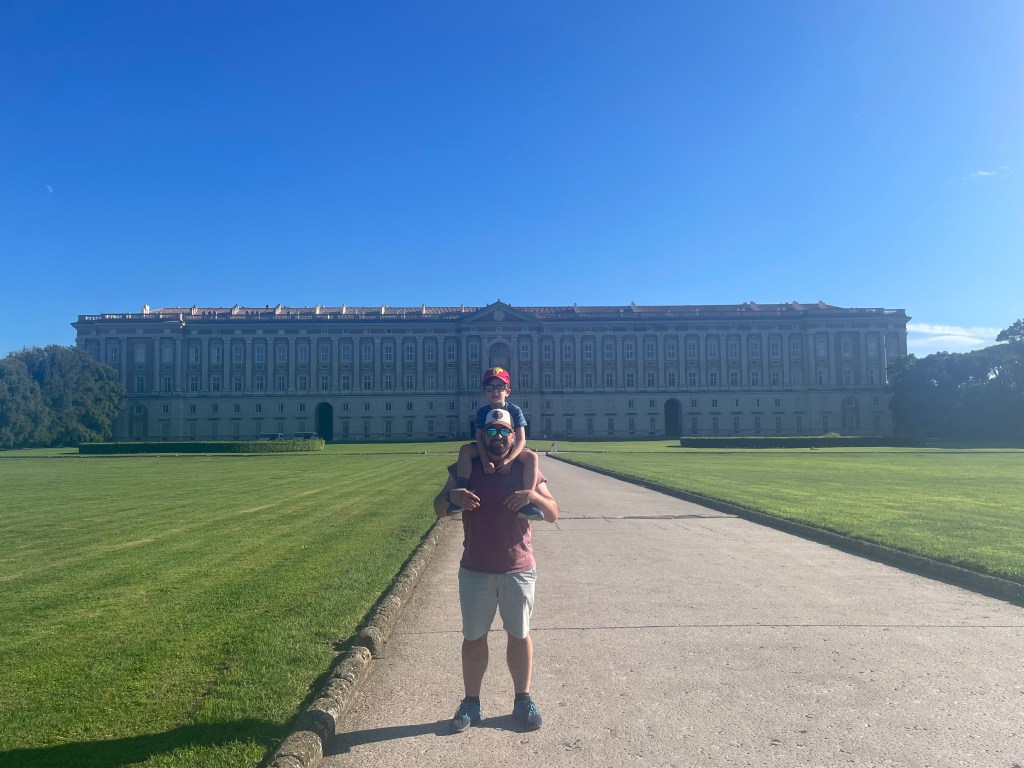
    This date will stick with us forever, and in the lead-up, we had no idea what was coming. Although, in hindsight, the symptoms were there. The day before, we had visited a local historical site (lots of those around here), and boy, was it hot. We attributed the requirement for lots of water and continuous trips to the loo to this; little did we know.

    The day before…

    Temperatures at this point were reaching almost 40 degrees Celsius. As the symptoms had only become apparent when we moved here, we put the thirst, frequent urination and tiredness down to the heat and drinking shed loads of bottled water. However, after 3 weeks of this and the more frequent waking up in the night for T to go to the toilet as well as needing the toilet regularly throughout the day, we started to question whether something else was going on.

    Before moving to Italy, I had been working in a GP practice for almost 4 years as a Dietitian and Trainee Advanced Clinical Practitioner. It was only this experience that led me to question whether T had a Urinary Tract Infection (UTI) or Diabetes. I tried to rule out the possibility of it being a UTI by asking about other symptoms, but if you have a young boy you will know that they just like saying ‘no’.

    First Clinic

    Luckily, as a military family we fall under the remit of a Royal Navy GP and access was quick, with an appointment the same morning. Initially having been asked if it was an urgent appointment as appointments were thin on the ground that Monday morning, I said ‘no’ it wasn’t urgent but also it wasn’t really a routine matter that could wait a week. 10 minutes later, I received a call to say that the Dr would see him that morning. Let’s put it this way, I think that I was in denial about how serious it could be.

    Typical me, I felt like I was probably wasting an appointment and overthinking the symptoms. I am pretty sure I even started the conversation with, ‘I’m sorry if I am wasting your time’. A physical examination and urine dip later, we had the answer and it wasn’t what I wanted to hear. I knew before being told that it was what I was hoping against when the doctor seemed to face the sink (essentially the wall) straight away after dipping the urine – it only takes 45 seconds to see if there is anything that would suggest an infection.

    T had all of the 4 symptoms of Type 1 Diabetes:

    • Thirst
    • Tiredness
    • Thinness (this is something that we didn’t notice as much as we were together all the time)
    • Toilet – needing to urinate constantly

    Urine full of ketones and glucose is not something that anyone wants and I even asked whether there were any other conditions that could cause these results as to my knowledge their weren’t.

    I will admit that I cried.

    I tried so hard not to cry, especially in front of T, but even after having worked as a dietitian for 13 years nothing prepared me for the fact that my child was probably going to be diagnosed with Type 1 Diabetes. We still needed bloods before a confirmed diagnosis could be given.

    The rest of the day felt like it went on forever. We had to get hold of dad who can’t have his phone on him at work. Once we were reunited, the preliminary diagnosis was explained and we were told to go home and get an overnight bag and to go to the U.S. Military Hospital as T would need to see the paediatrician for a work up and would be in for at least the night. Little did we know that T wouldn’t be home for 9 days.

    Our beautiful, fun-loving and funny boy was going to be told that life would never be the same for him. He was also going to have to go through a lot of things that an almost 5 year old shouldn’t have to. He had never had a blood test before…. I wanted to protect T from everything and came close to saying that he didn’t need to look at the needles but I quickly realised that it wouldn’t help him in the long run when needles would become a part of his life. I can confidently say that he was much braver than I am.

    As a parent, as you may know, it is horrible to see your child so vulnerable.

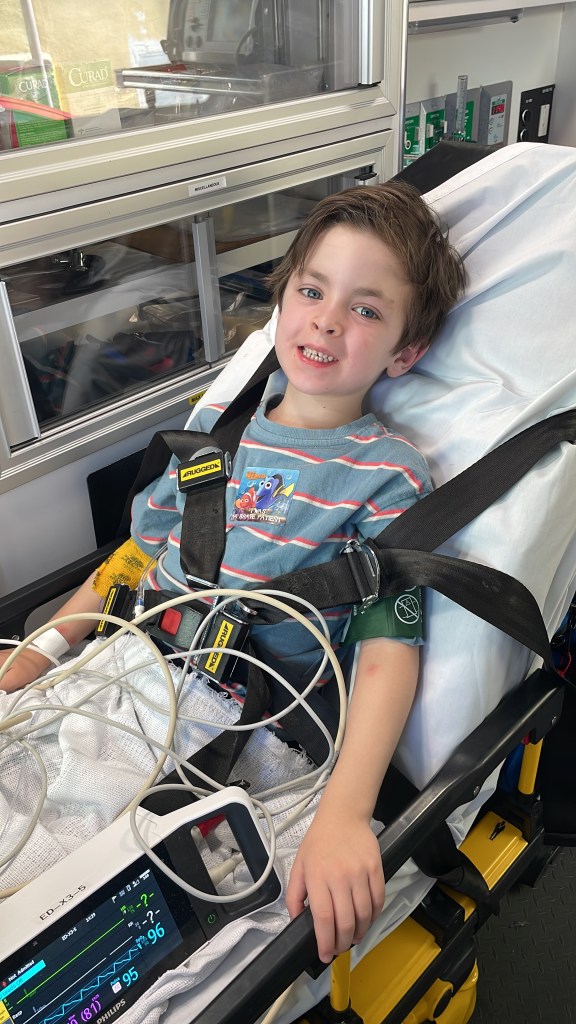
    Three Hospitals, two ambulances and 1 bumper knocked off a parked car later…

    The U.S. Hospital couldn’t provide the required care as it was not something that they had dealt with often (we are screened medically to move abroad) so they wanted us transferred to the Italian system and into a hospital where it is their bread and butter.

    Driving is also pretty epic in this part of Italy and my poor husband had to drive into the city centre for the first time, whilst following an ambulance and reunite himself with us in two very large hospitals whilst not speaking the language. Super dad.

    T was hungry and tired, never a good combination. However, until his blood glucose levels were in a safe range, he couldn’t eat.

    Levels when tested in the U.S. hospital were >800mg/dL, which if you google it (don’t ever google) is a medical emergency. I thank my lucky stars that he hadn’t gone into diabetic ketoacidosis (DKA), as it could have been so much worse. The Italian system works in a different currency for blood glucose levels, and in the UK this is the equivalent of >44.4 mmol/L. Lots of fluids and insulin later, it was coming down but he still couldn’t eat anything until later that night in the University Hospital where we would stay for 9 nights.

    Italian Hospitals are very different to the U.K. and as we were so new to the country we found ourselves in rooms full of doctors and nurses that spoke a different language, it was overwhelming. Infrastructure isn’t the priority out here and there are no curtains in the wards which was quite a strange experience. However, the care was excellent and it was amazing how many of the doctors spoke English and using google translate and our pigeon Italian we got by.

    After more blood tests and a visit from what I can only assume was a registrar equivalent, we were told to await the results of the autoantibodies but his symptoms and random glucose result in their eyes was the diagnosis of Type 1 Diabetes. We were going to take it in turns to stay with T (there was a chair next to his bed) but I stayed the first night. Dad did the 50 minute round-trip to get us more home comforts and we discovered how strict Italian Hospitals were with visiting hours when, upon his return, he wasn’t allowed back up to the ward. Another thing that set me off crying… Luckily the security guard went off for a cigarette so we both went back upstairs to see T before being dad headed back home again.

    It’s only writing this down that has made me reflect on what a crap day it was. However, it never ceases to amaze me, the care that healthcare professionals provide, despite having worked in that sector for so long. There we were, in someone else’s country and all they cared about was getting T safe clinically and all the while apologising for their English.

    I’m going to leave this essay there and perhaps I will touch on our time in the Italian system in another post.

    L x

    Leave a comment